Whether an AMC (Annual Maintenance Contract) is worth it compared to calling for service only when something breaks depends less on marketing and more on a fairly simple pattern we see across customers.
The Pay-Per-Visit Pattern
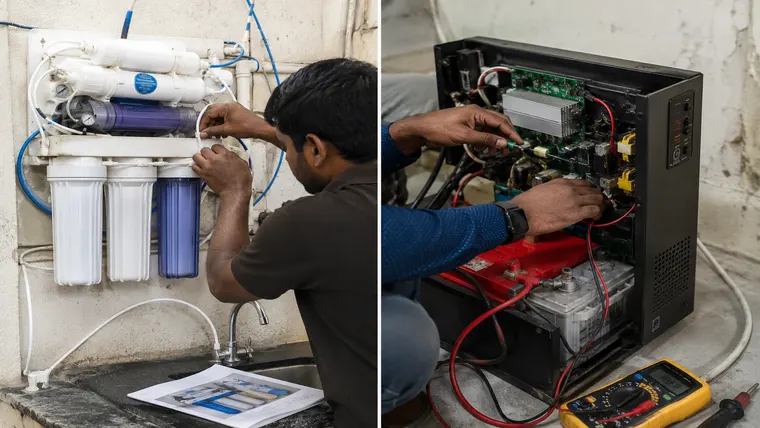
Without a scheduled AMC, most households only call once there's a visible problem — reduced flow, odd taste, or an inverter that's stopped charging. By that point, the underlying part (membrane, battery, solenoid valve) has often been degrading unnoticed for months, sometimes leading to a bigger repair than a routine service would have caught early.
The AMC Pattern
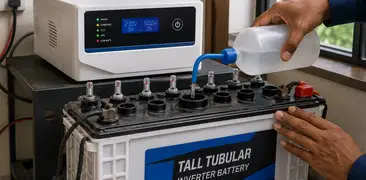
Scheduled visits catch small issues — a slightly low battery water level, an ageing filter, a membrane trending toward the end of its life — before they cause a breakdown. Over a year, this typically means fewer emergency repair calls and parts that are replaced on a planned schedule rather than after failure.
Where the Cost Comparison Actually Lands
- If you're diligent about calling for routine service every 3–6 months anyway, pay-per-visit can work out similar in cost — but few households keep to that schedule consistently without a reminder.
- If service tends to get pushed off until something breaks, AMC customers generally spend less overall, since preventive part replacement (candles, filters, battery water) is cheaper than emergency repairs, and AMC includes discounted part pricing.
- For businesses — offices, hostels, hotels — the calculation leans more clearly toward AMC, since downtime itself has a cost beyond the repair bill.
Our Honest Take
If you're confident you'll book routine service on schedule yourself, pay-per-visit is a reasonable choice. If you know maintenance tends to get forgotten until there's a problem — which is most households — an AMC removes that risk and usually comes out cheaper over a year once you count avoided emergency repairs.